Introduction
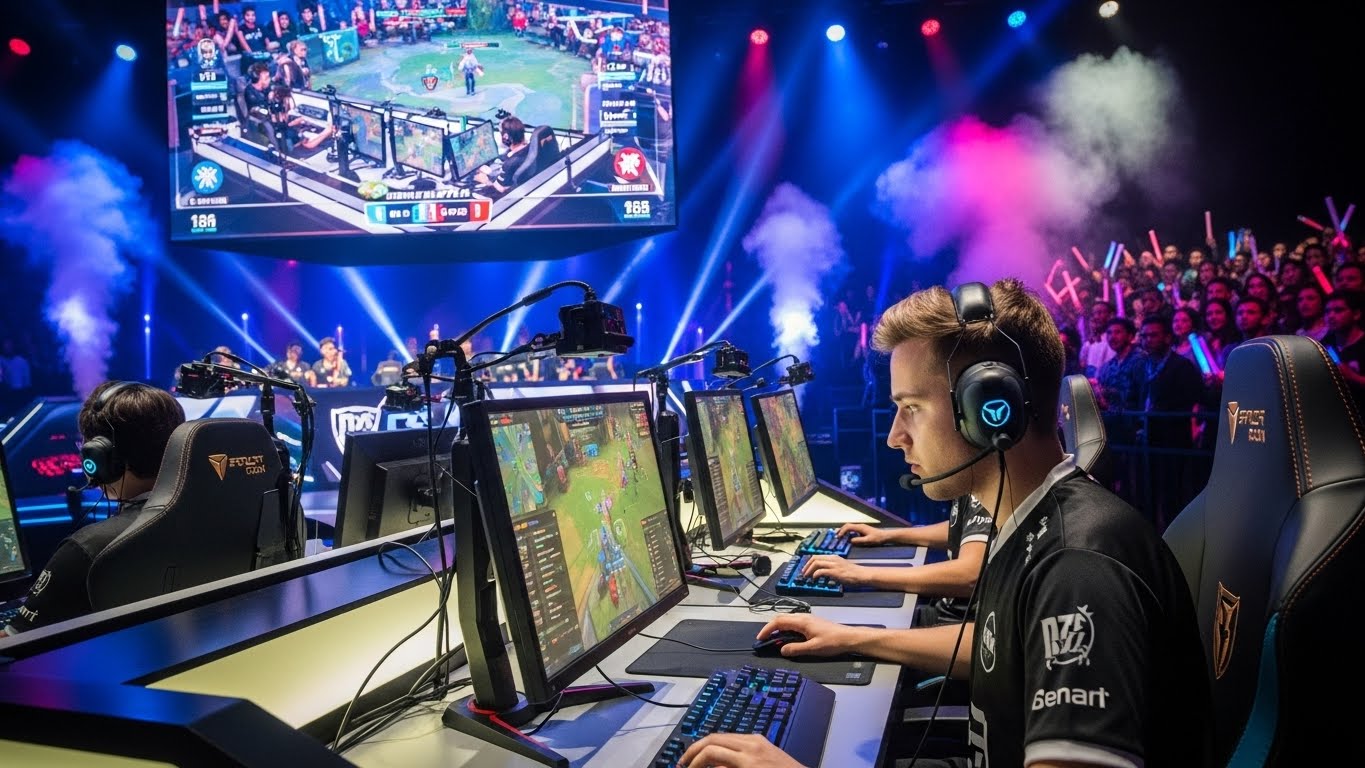
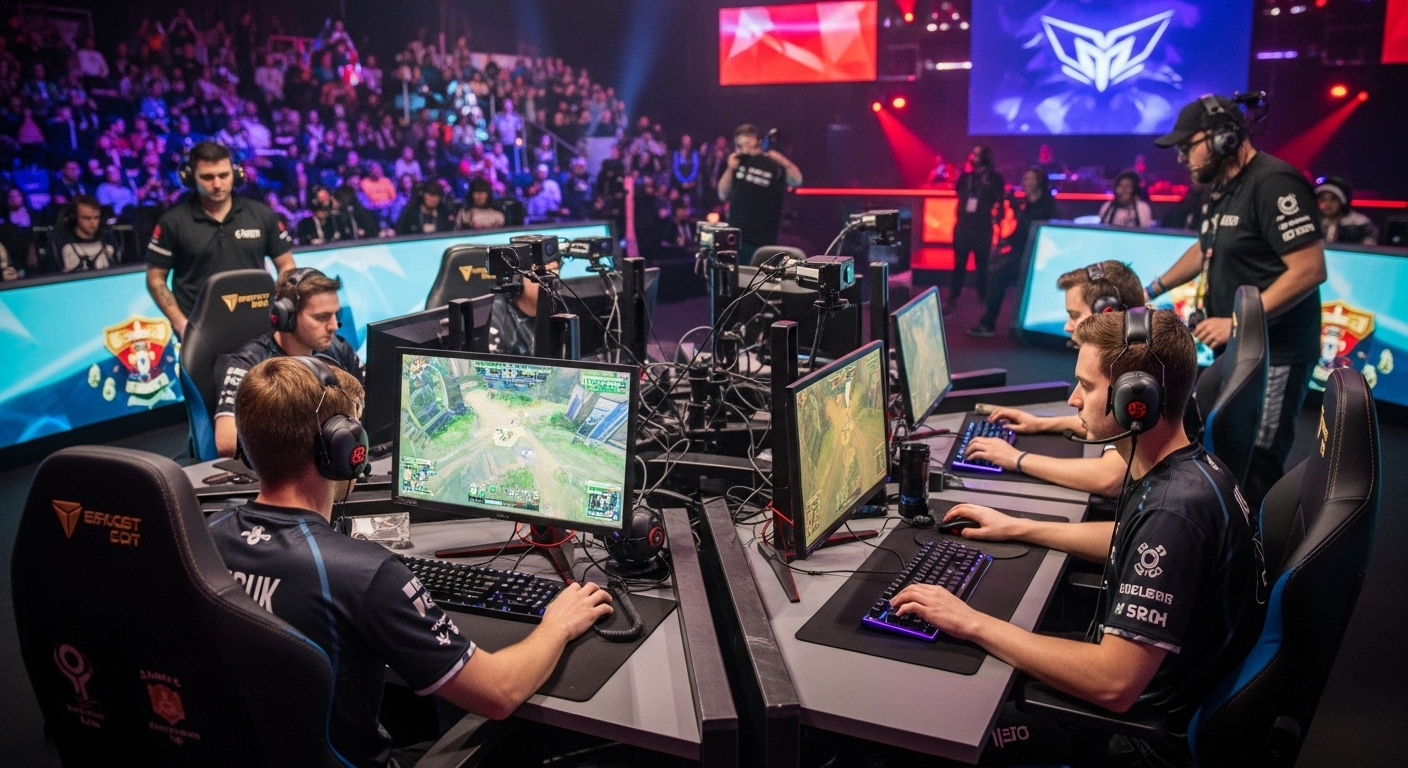
In the past two decades, the term Esports has evolved from being an underground subculture into a massive global phenomenon. What was once a niche hobby practiced by a small community of dedicated gamers has become one of the most exciting and profitable entertainment industries on the planet. Esports, or electronic sports, refers to organized competitive gaming where individuals or teams play video games professionally in front of audiences that can number in the millions. These competitions can involve games of various genres—first-person shooters, real-time strategy games, sports simulations, battle royales, and multiplayer online battle arenas.
The rise of Esports marks a significant cultural shift in how people perceive both gaming and competition. Once dismissed as a mere pastime, gaming has matured into a professional pursuit that demands dedication, teamwork, strategy, and mental endurance equal to traditional sports. With global tournaments offering prize pools in the millions, sponsorships rivaling those of major sports teams, and celebrity players recognized worldwide, Esports has proven it’s here to stay.
The Origins of Esports
The origins of Esports date back further than many realize. Competitive gaming didn’t begin in the era of Twitch or YouTube—it began decades earlier. The first known video game competition took place in 1972 at Stanford University, where students competed in the game Spacewar! for a prize of a year’s subscription to Rolling Stone magazine. Though humble in scale, this event laid the foundation for the concept of organized gaming competition.
In the 1980s, arcade culture brought gaming to the mainstream. Games like Pac-Man, Donkey Kong, and Space Invaders gave rise to competitive high-score contests. The 1980 Space Invaders Championship organized by Atari was one of the first large-scale gaming tournaments, drawing more than 10,000 participants across the United States. This was the dawn of competitive gaming’s potential.
As technology advanced and consoles like the Nintendo Entertainment System and Sega Genesis entered homes, competition began to move from arcades to living rooms. Gamers started organizing local tournaments, and publications like Nintendo Power even hosted nationwide contests. But it wasn’t until the 1990s, with the advent of local area network (LAN) parties and online gaming, that Esports truly began to take shape.
The Birth of Modern Esports
The 1990s were a transformative decade for gaming. The rise of personal computers and online multiplayer games laid the groundwork for Esports as we know it today. Games like Doom, Quake, and StarCraft became early pillars of competitive gaming. LAN tournaments brought players together in person, creating intense and passionate competition.
One of the defining moments came in 1997 when the first official Quake tournament, “Red Annihilation,” was held. The winner, Dennis “Thresh” Fong, became one of the world’s first professional gamers, even winning the car of the game’s creator as a prize. Around the same time, the Cyberathlete Professional League (CPL) was founded, marking the first serious attempt to professionalize competitive gaming.
In Asia, particularly South Korea, Esports took root with remarkable speed. The release of StarCraft in 1998 revolutionized competitive gaming in the country. Televised matches, professional teams, and sponsorship deals emerged rapidly. South Korea’s cultural and governmental support for gaming transformed Esports into a respected career path, setting a precedent that would influence the rest of the world.
The Explosion of Online Platforms
The 2000s brought the internet to nearly every household, changing gaming forever. With faster connections, players could compete with others around the world without ever meeting in person. Games like Counter-Strike, Warcraft III, Dota, and Halo became staples of the Esports scene. Online tournaments began to thrive, and platforms such as Major League Gaming (MLG) in the United States offered structured competition for both amateur and professional players.
A critical factor in the rise of Esports was the emergence of streaming platforms. Before live streaming, fans had limited access to watch matches unless they attended events physically or downloaded recorded videos. When Twitch launched in 2011, it changed everything. Suddenly, fans could watch tournaments live from anywhere in the world, engage in chat discussions, and support their favorite players or teams directly. The accessibility and community-building aspect of streaming turned Esports into a spectator sport rivaling traditional television broadcasts.
The Business of Esports
Today, Esports is not only entertainment—it’s big business. The global Esports market has grown to generate billions in annual revenue through sponsorships, media rights, ticket sales, and merchandise. Major corporations such as Intel, Red Bull, Coca-Cola, and Mercedes-Benz have invested heavily in Esports sponsorships. Game developers have also realized the financial potential of supporting competitive ecosystems, as seen with Riot Games’ League of Legends and Valve’s Dota 2.
Prize pools have reached extraordinary levels. The International, Dota 2’s premier tournament, has offered prize pools exceeding 30 million dollars, making it one of the richest events in competitive sports. Similarly, Fortnite’s World Cup and League of Legends World Championship attract millions of viewers and distribute vast sums in prize money.
The Esports economy also supports a variety of related professions—coaches, analysts, commentators, event organizers, content creators, and marketing specialists. Streaming platforms have turned individual players into influencers, with some earning millions annually through brand deals and viewer donations.
The Global Esports Community
One of the most remarkable aspects of Esports is its global reach. From Seoul to Stockholm, Los Angeles to Shanghai, Esports transcends geography and language. It has created a shared culture among gamers worldwide. Major tournaments now fill massive stadiums, with fans waving team banners and cheering just like at a traditional sporting event.
This global appeal has also fostered inclusivity. Unlike traditional sports, where physical ability often dictates participation, Esports welcomes players regardless of size, gender, or background. Though the industry still struggles with issues of diversity and representation, it has made strides in creating pathways for all kinds of talent.
Regional scenes have distinct identities. South Korea is renowned for its discipline and infrastructure, Europe for its strategic diversity, North America for its marketing power, and China for its massive player base and audience size. International competitions like The International or League of Legends Worlds bring these regions together, creating rivalries and storylines that captivate millions.
Esports and Traditional Sports: A Convergence
As Esports has matured, it has begun to overlap with traditional sports in numerous ways. Professional sports teams now own or sponsor Esports divisions. The NBA, for instance, runs its own NBA 2K League, where professional basketball teams draft Esports athletes to represent them. Soccer clubs like Paris Saint-Germain, Manchester City, and FC Barcelona have also invested in competitive gaming teams across multiple titles.
Moreover, Esports tournaments now follow structures similar to traditional sports leagues, with franchising, player contracts, and transfer windows. Training facilities, fitness regimens, and sports psychologists are becoming standard for top-tier teams. This professionalization has elevated the legitimacy of Esports and helped it gain recognition from mainstream audiences.
Even media coverage has shifted. Major sports networks regularly broadcast Esports events, and universities offer Esports scholarships, treating players as varsity athletes. The boundary between physical and digital competition continues to blur, suggesting a future where Esports and traditional sports coexist seamlessly within the broader landscape of athletic entertainment.
The Skills Behind Esports Success
Critics often underestimate the skill required to compete at the highest level in Esports. Professional players must possess extraordinary reflexes, hand-eye coordination, and cognitive speed. The margin for error in most competitive games is microscopic, with matches often decided by split-second decisions.
But Esports excellence isn’t just about reaction time. It involves strategic thinking, communication, teamwork, and adaptability. Games like League of Legends and Dota 2 require deep understanding of mechanics, character abilities, and resource management. Tactical shooters like Counter-Strike demand precise aim, teamwork, and map awareness. Real-time strategy games like StarCraft II test a player’s multitasking and macro-management capabilities.
Top players train for long hours each day, often studying replays, scrimmaging against other teams, and working on specific mechanics. Mental endurance and emotional control are essential, especially during high-stakes tournaments where pressure can be immense. Just as with physical athletes, burnout is a real concern, leading to shorter career spans for many professional gamers.
The Cultural Impact of Esports
Esports has not only changed gaming but also reshaped entertainment culture. It has created new celebrities—players, casters, and content creators—who command loyal fanbases across social media. Streamers like Ninja, Faker, and s1mple are recognized globally, influencing millions of fans and inspiring a new generation of gamers.
Moreover, Esports has bridged the gap between digital and physical events. Esports arenas have been built in cities around the world, from Los Angeles to Beijing. Massive events like the League of Legends Worlds finals have drawn live audiences exceeding 50,000 people, while millions more watch online.
Music, fashion, and gaming culture have also intertwined. Pop stars perform at Esports events, and luxury brands collaborate with gaming teams. Gaming apparel and peripherals have become part of mainstream style, blurring the lines between Esports identity and youth culture.
Challenges Facing the Esports Industry
Despite its rapid growth, Esports faces numerous challenges that will shape its future. One of the biggest issues is sustainability. While top-tier tournaments and organizations thrive, many smaller teams struggle financially. Sponsorship-driven revenue can be unstable, and player salaries sometimes exceed what organizations can realistically sustain.
Another challenge lies in regulation. Esports lacks a unified governing body, which leads to inconsistencies in player rights, transfer rules, and tournament structures. Issues like match-fixing, doping (through stimulants), and cheating have occasionally tarnished its reputation. Establishing universal standards for fairness and integrity is crucial for long-term legitimacy.
Mental health is another growing concern. The intense pressure to perform, combined with long training hours and public scrutiny, can lead to burnout, anxiety, and depression. Organizations are beginning to provide psychological support, but the culture of overtraining remains prevalent.
Finally, inclusivity remains an ongoing issue. Female representation in professional Esports remains limited, with toxicity and discrimination often cited as barriers. Many organizations are working to create more welcoming environments, but progress requires cultural change across the community.
The Future of Esports
Looking ahead, the future of Esports appears incredibly bright. With technology continuing to evolve, new platforms, formats, and opportunities are emerging. Virtual reality and augmented reality could redefine how players compete and how fans experience matches. Artificial intelligence may revolutionize game design and analysis, allowing for more sophisticated competition and training tools.
The integration of blockchain and digital collectibles has also opened new possibilities for fan engagement, from exclusive team NFTs to tokenized rewards. Meanwhile, mobile Esports is expanding rapidly, especially in regions like Southeast Asia and India, where mobile gaming dominates.
As Esports continues to gain recognition, it may one day become a standard feature in global sporting events. Discussions about Esports as an Olympic category have already begun, signaling its acceptance as a legitimate competitive pursuit. The next generation of players will grow up in a world where being a professional gamer is as natural as aspiring to be a footballer or basketball player.
Conclusion
Esports has evolved from a small community of passionate gamers into one of the world’s most influential industries. It represents the perfect convergence of technology, entertainment, and competition. The journey from early LAN tournaments to global stadium events highlights the power of digital culture to unite people across borders and redefine what it means to be an athlete in the modern age.
The industry still faces challenges, but its trajectory is undeniably upward. As infrastructure, investment, and cultural acceptance continue to grow, Esports will likely solidify its place as a central pillar of 21st-century entertainment. For millions of players and fans, it is more than just gaming—it is a lifestyle, a career, and a community built around passion, skill, and shared digital dreams.