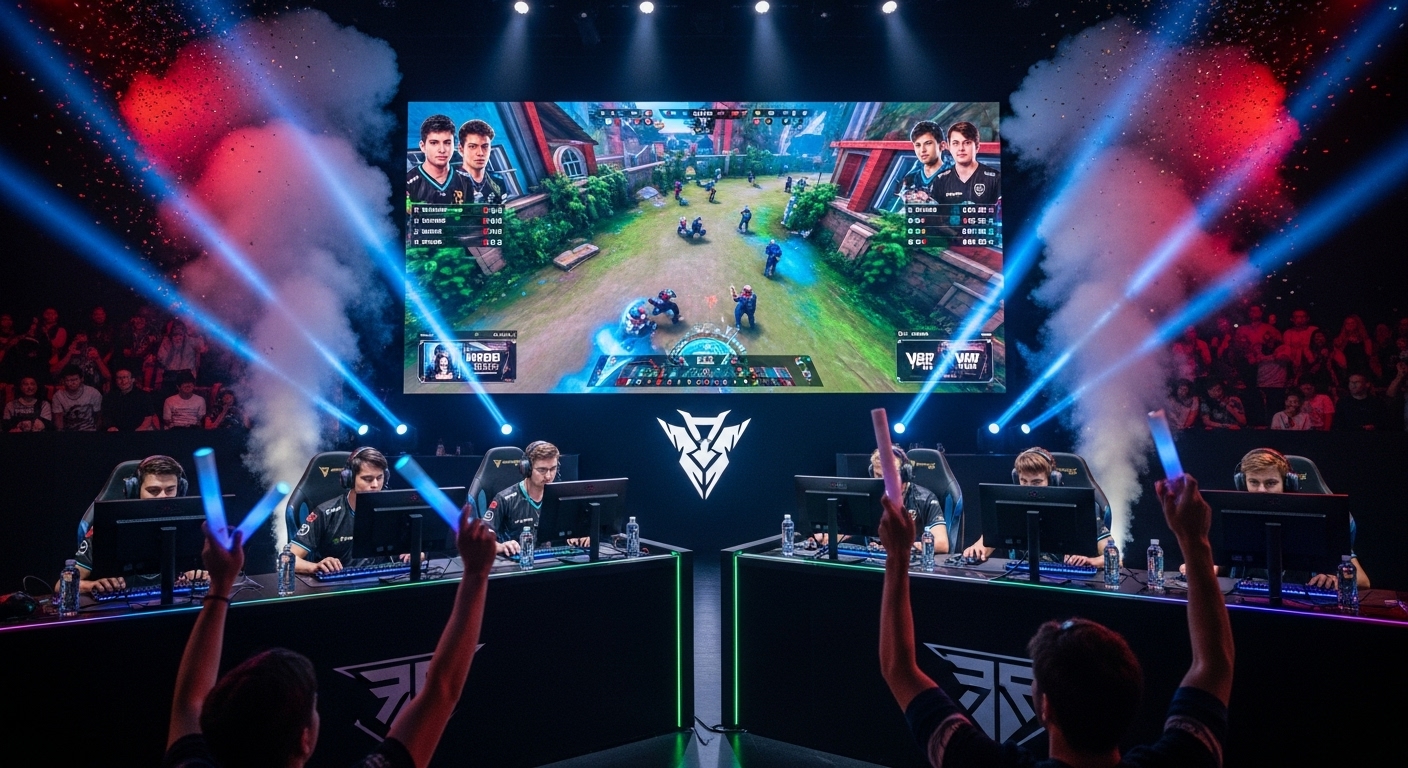
Esports has emerged as one of the most significant cultural phenomena of the 21st century. From humble beginnings in arcades to becoming a multi-billion-dollar industry with global fanbases, esports has reshaped entertainment and the world of competitive gaming. This blog post will take you through the evolution of esports, its massive global impact, the factors driving its growth, and its future in the entertainment and sports industries.
What is Esports?
Esports, short for electronic sports, refers to organized, multiplayer video game competitions, particularly between professional players, individually or as teams. It’s more than just playing video games for fun – it’s about competing in tournaments that attract significant sponsorships, large audiences, and a professional level of skill development.
The competitive nature of esports sets it apart from casual gaming. It is played in a tournament format with clear objectives, strategy, and rules, akin to traditional sports. Popular games such as League of Legends, Dota 2, Counter-Strike: Global Offensive, Fortnite, and Overwatch have become synonymous with esports competitions that boast enormous viewership.
The Early Days of Esports
Esports as we know it today didn’t just spring up overnight. Its roots can be traced back to the late 1990s and early 2000s. In the late ’90s, competitive gaming was still in its infancy, largely limited to local LAN (Local Area Network) tournaments where players would compete in games like Quake or StarCraft.
The Birth of Organized Esports
The first notable tournament that laid the foundation for modern-day esports was the Red Annihilation tournament held in 1997. It was a Quake tournament with a grand prize of a Ferrari. This event not only provided a glimpse of competitive gaming but also showed that gaming could generate real-world fame and prestige.
However, it was in the early 2000s that esports began to take a more structured form. One of the most important moments in the rise of esports was the introduction of World Cyber Games (WCG) in 2000. Often regarded as the “Olympics of Esports,” WCG brought together players from all over the world to compete in various games. The success of the WCG encouraged other tournaments, and the competitive scene started to gain traction.
The Rise of Online Gaming
As broadband internet access became more widespread in the early 2000s, online gaming took off. This allowed players to compete against each other globally, which led to a significant growth in the esports audience. Games like Warcraft III, Counter-Strike, and StarCraft became iconic in the competitive gaming community during this period.
The Professionalization of Esports
The 2010s marked the true professionalization of esports, with organizations, players, and tournaments gaining recognition from mainstream media. Esports teams began to form sponsorship deals with global brands, and streaming platforms like Twitch provided a place for fans to watch their favorite players and teams compete.
The Emergence of Esports Organizations
Esports organizations, such as Team Liquid, Fnatic, and Cloud9, grew to become household names. These organizations formed teams of professional gamers and created support structures for training, management, and content creation. This marked the shift from individual players to organized, team-based competitions, where professional players were treated like athletes.
Esports teams operate similarly to traditional sports franchises, with coaches, analysts, and management staff. They also built robust fanbases and established a presence on social media, which further helped cement esports’ place in popular culture.
Major Esports Tournaments and Leagues
With the increasing popularity of esports, tournament organizers began to host global competitions with massive prize pools. These tournaments attracted sponsorships from major corporations like Intel, Coca-Cola, and Red Bull. One of the most iconic tournaments in the esports world is The International for Dota 2, which boasts some of the largest prize pools in gaming history.
In addition to single events, dedicated esports leagues began to emerge. The League of Legends Championship Series (LCS) and Overwatch League (OWL) were among the first major leagues that provided a regular, professional competition format. These leagues brought together top teams, regional rivalries, and broadcasted matches to a worldwide audience, further legitimizing esports as a sport.
Esports’ Global Impact
Esports has grown into a global phenomenon, attracting millions of viewers and players worldwide. It is no longer confined to specific regions or countries. While South Korea remains one of the most important hubs of esports, other countries such as China, the United States, and Europe have developed their own vibrant esports ecosystems.
A New Form of Entertainment
Esports has brought about a fundamental shift in entertainment. In the past, people would gather to watch traditional sports, movies, or concerts, but now esports provides a new kind of viewing experience. Esports tournaments are broadcasted online through platforms like YouTube and Twitch, where millions of viewers tune in to watch their favorite games.
Esports events also often sell out large stadiums. The League of Legends World Championship Final, for example, has been held in arenas with over 20,000 seats, showcasing the scale and enthusiasm of its audience. This indicates that esports is no longer a niche interest but a massive part of the global entertainment landscape.
Social Media and Streaming Platforms
Social media platforms such as Twitter, Instagram, and Facebook play a major role in promoting esports and helping it reach wider audiences. Players, teams, and organizations use these platforms to share their content, interact with fans, and announce major news. Likewise, platforms like Twitch and YouTube allow gamers to stream their gameplay, providing an avenue for rising stars to build their fanbases.
The interaction between players and fans has made esports more personal and engaging. Fans can interact with their favorite streamers in real-time through chat features, creating a sense of community that traditional sports may lack.
Esports and Sponsorships
The commercial side of esports has seen tremendous growth over the years. Major tech companies, energy drinks, sportswear brands, and even automobile manufacturers have entered the esports sponsorship scene. This has not only fueled the growth of the industry but also provided players with financial support.
For instance, Intel has been a long-standing sponsor of many major esports tournaments, while Red Bull has launched its own esports competition and sponsored individual athletes. These partnerships have helped establish esports as a legitimate, revenue-generating entity.
The Esports Economy
Esports is no longer just about the players and fans; it has become a major part of the global economy. According to industry reports, the esports market is expected to generate over $1 billion in revenue by 2025, with the majority of income coming from sponsorships, advertising, media rights, and ticket sales.
The Role of Streaming Platforms
Streaming platforms such as Twitch and YouTube have played a pivotal role in the growth of esports. These platforms not only offer gamers a place to share their content but also provide a reliable source of income for streamers. Streamers can earn revenue through donations, subscriptions, ads, and sponsorships.
For example, popular streamers like Ninja (Tyler Blevins) and Shroud (Michael Grzesiek) have made millions of dollars by streaming games and building massive followings on platforms like Twitch and YouTube. Their popularity has led to endorsement deals and partnerships with big brands, making them household names in the gaming and entertainment industries.
Merchandising
Just like traditional sports, esports has seen an increase in merchandising. Fans of esports teams can now buy jerseys, hats, and other branded apparel, further connecting them with their favorite teams and players. Esports organizations have also capitalized on this by releasing exclusive in-game items, skins, and memorabilia.
Esports as a Career Path
The growth of esports has created opportunities for individuals to pursue gaming as a full-time career. Professional players can make substantial incomes from tournament winnings, sponsorships, streaming, and content creation. Beyond players, there are numerous career opportunities within the esports ecosystem, including coaches, analysts, team managers, event organizers, and marketing professionals.
The Life of an Esports Athlete
Being a professional esports athlete is no easy feat. Just like traditional athletes, esports players must dedicate significant time and effort to training, improving their skills, and competing in tournaments. Many esports players follow rigorous practice schedules and have coaches to help them enhance their gameplay.
However, the life of an esports player can be physically demanding, with long hours spent in front of a screen. It has led to a growing concern for mental and physical health within the esports community. Teams and organizations are now investing in better training facilities, mental health support, and physical fitness to ensure that their players maintain their health while competing.
The Future of Esports
The future of esports looks bright, with continued investment, technological advancements, and a growing fanbase. As esports becomes more mainstream, we can expect to see further integration with traditional sports, including the possibility of esports being included in major sporting events like the Olympics.
Esports and Virtual Reality (VR)
One of the most exciting developments on the horizon for esports is the integration of Virtual Reality (VR). VR has the potential to revolutionize the way people experience esports, providing a more immersive and interactive viewing experience. As VR technology becomes more accessible and affordable, esports tournaments may incorporate VR elements that allow fans to feel as though they are part of the action.
Expansion into New Markets
Esports is already popular in many parts of the world, but there are still untapped markets where esports is gaining traction. Countries in Southeast Asia, Africa, and South America are increasingly embracing esports, with new tournaments, teams, and fans emerging in these regions.
Conclusion
Esports has evolved from a niche hobby to a global entertainment industry with millions of fans, players, and organizations. It has transformed the way people view gaming and has provided a legitimate career path for many aspiring gamers. With continued growth, technological advancements, and the increasing popularity of competitive gaming, esports will only continue to rise and evolve. The future of esports is limitless, and we are only beginning to witness the scale of its impact on the entertainment landscape.