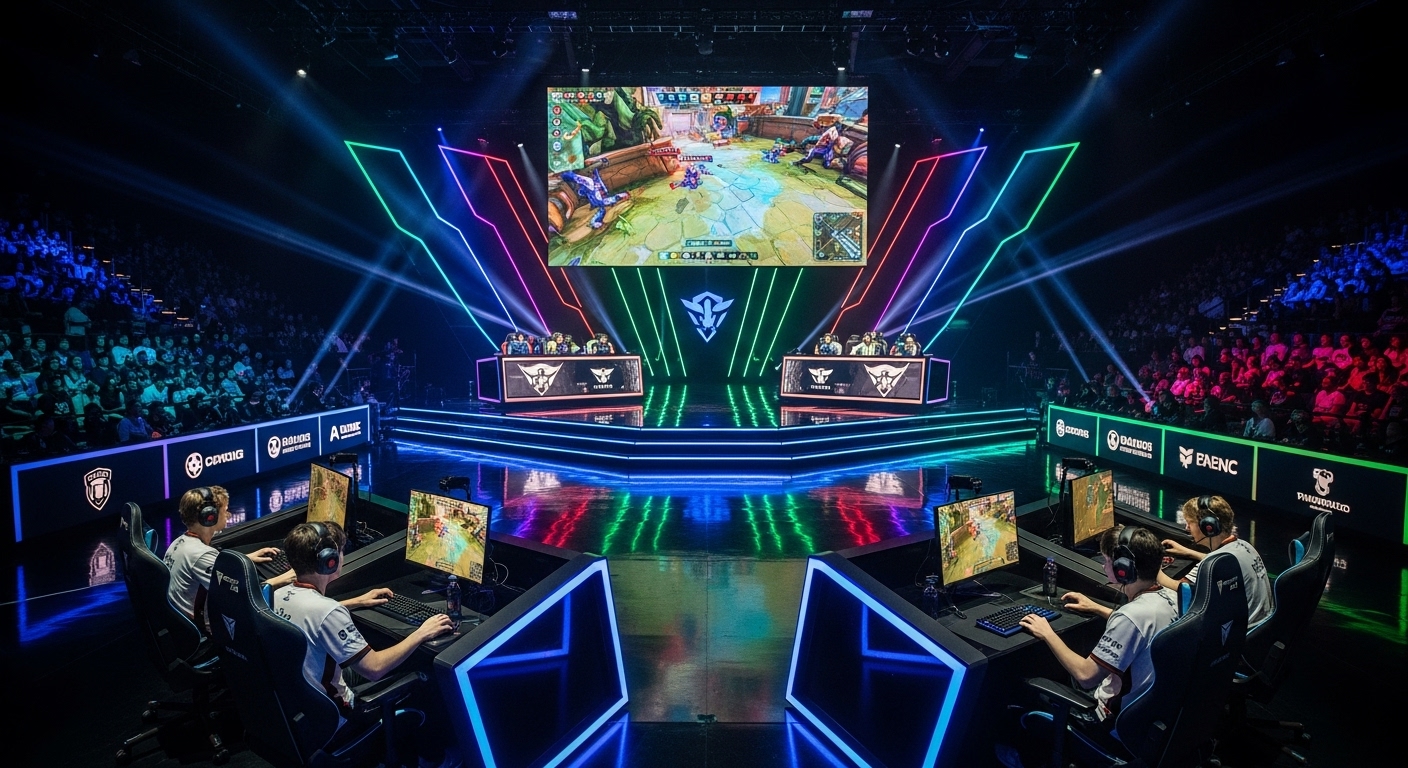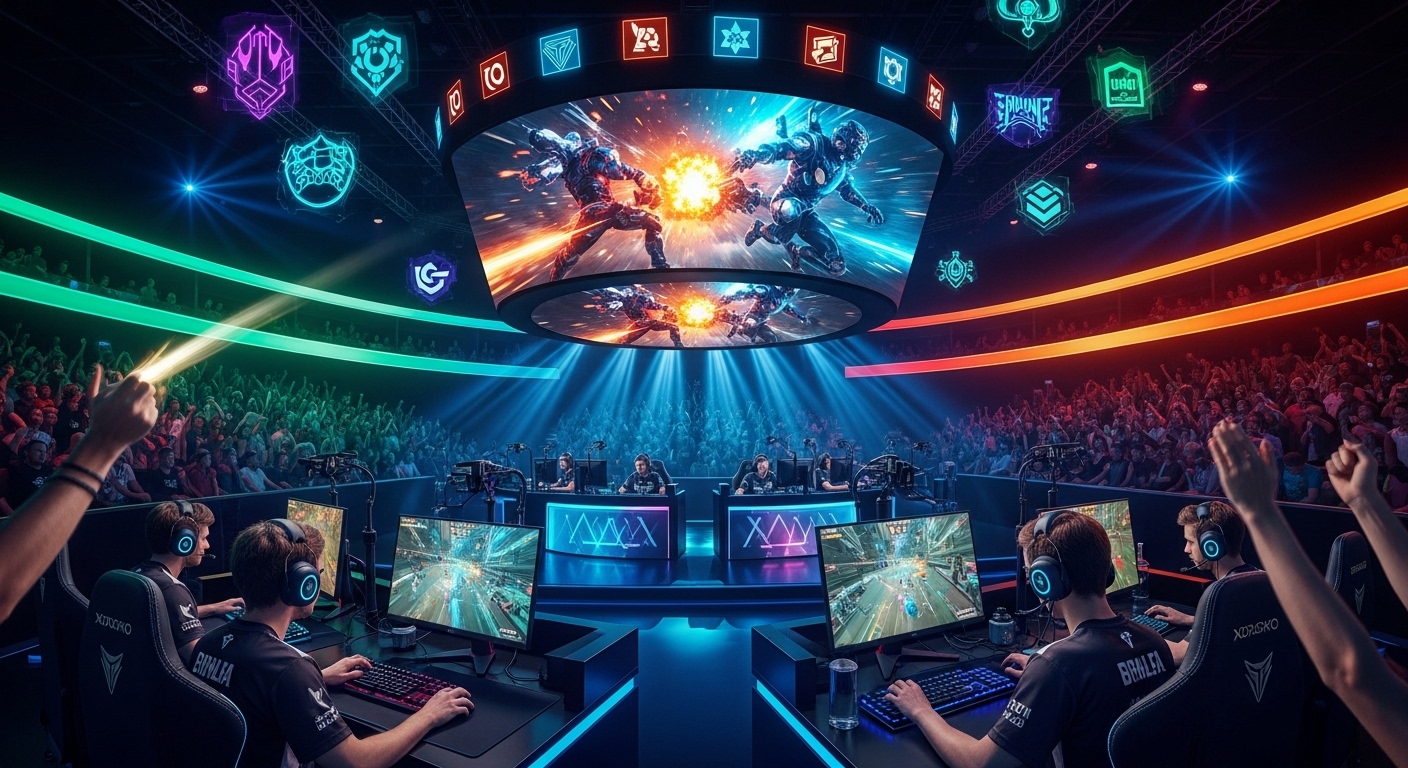
In the last two decades, a once obscure pastime has transformed into a multi-billion-dollar global industry. Esports, short for electronic sports, represents the competitive side of video gaming where players and teams face off in organized tournaments for glory, sponsorships, and massive prize pools. What began as small gatherings of enthusiasts playing in basements or arcades has evolved into a cultural and economic powerhouse that rivals traditional sports in audience size and influence.
Understanding Esports
Esports is the organized competition of video games played at a professional level. Unlike casual gaming, which is primarily for entertainment, esports involves structure, rules, coaches, analysts, and even scouts — much like traditional athletics. Players specialize in specific games, train for long hours, and often belong to professional teams that represent sponsors, organizations, or countries.
The genres that dominate the esports scene are diverse. Popular titles include multiplayer online battle arenas (MOBAs) such as League of Legends and Dota 2, first-person shooters like Counter-Strike: Global Offensive and Valorant, real-time strategy games like StarCraft II, and sports simulators such as FIFA and NBA 2K. Each game has its own community, style of play, and set of professional circuits.
The Early History of Competitive Gaming
The roots of esports can be traced back to the early days of video games in the 1970s and 1980s. One of the earliest recorded gaming competitions took place in 1972 at Stanford University, where students competed in a game called Spacewar. The winner received a subscription to Rolling Stone magazine — a humble reward compared to today’s multi-million-dollar prizes.
In the 1980s, the rise of arcade games like Pac-Man and Donkey Kong sparked competitive high-score challenges. Magazines and local arcades began featuring leaderboards, and skilled players gained celebrity status in their communities. However, these early contests were largely individual efforts without major sponsorship or media coverage.
The 1990s brought significant technological advancements that changed everything. The arrival of home consoles, local area networks (LANs), and the internet allowed players to connect and compete remotely. Games like Quake, StarCraft, and Street Fighter II became early pioneers of organized tournaments. This era laid the groundwork for what would later become professional esports.
The 2000s: The Foundation of Modern Esports
The 2000s marked the true beginning of modern esports. As broadband internet became common and online gaming platforms grew, professional leagues began to emerge. The Cyberathlete Professional League (CPL) and Major League Gaming (MLG) in the United States, as well as the World Cyber Games (WCG) in South Korea, formalized esports competition and gave players opportunities to earn real money.
South Korea, in particular, became a global epicenter for esports culture. The government supported gaming infrastructure, and television networks began broadcasting matches of StarCraft, turning players into national celebrities. This model of televised esports laid the foundation for what would become the global entertainment spectacle of the 2010s.
Games like Counter-Strike 1.6, Warcraft III, and Halo 2 defined the competitive landscape of this era. Although esports was still niche compared to mainstream sports, it developed a passionate fan base, structured tournaments, and the beginnings of professional player careers.
The Streaming Revolution and the Explosion of Esports Popularity
The late 2000s and early 2010s saw the birth of game streaming platforms such as Twitch and YouTube Gaming. These services completely changed how audiences consumed gaming content. Instead of relying on television broadcasts or physical attendance, fans could now watch live matches from anywhere in the world.
Streaming democratized esports viewership, allowing even smaller tournaments to find global audiences. The instant accessibility and interactivity of streaming — where fans could chat, donate, and follow their favorite players — turned esports into a shared, social experience.
With visibility came growth. Sponsorships, advertising, and brand partnerships flooded into the scene. Major companies like Coca-Cola, Intel, Red Bull, and Nike began investing in esports teams and tournaments. Prize pools skyrocketed, and the line between traditional sports and digital competition started to blur.
The Emergence of Major Esports Titles
By the mid-2010s, certain games emerged as global cornerstones of competitive play. Each brought something unique to the esports ecosystem.
League of Legends
Released by Riot Games in 2009, League of Legends quickly became one of the most played and watched games in the world. The game’s accessibility, combined with its deep strategic mechanics, helped it dominate the MOBA genre. The League of Legends World Championship attracts tens of millions of viewers annually and features extravagant production quality rivaling that of the Super Bowl.
Dota 2
Valve’s Dota 2 became famous for its record-breaking prize pools, particularly through The International, its annual world championship. Funded by in-game purchases, the tournament’s prize money has often exceeded $30 million, making it one of the most lucrative competitions in esports history.
Counter-Strike: Global Offensive
Few titles have demonstrated the staying power of Counter-Strike. Its simple but highly skill-based gameplay makes it a cornerstone of competitive first-person shooters. CS:GO established a global circuit of professional leagues, with events like the ESL Pro League and Intel Extreme Masters attracting millions of fans.
Fortnite
When Fortnite entered the scene in 2017, it brought esports to a new demographic: younger players and mainstream audiences. Epic Games’ Fortnite World Cup in 2019 awarded a $3 million grand prize to a 16-year-old winner, symbolizing the game’s massive appeal and the growing youth culture around competitive gaming.
The Business of Esports
Esports is not just a form of entertainment; it’s an economic powerhouse. The industry now generates billions annually through multiple revenue streams: sponsorships, merchandise, advertising, media rights, ticket sales, and in-game purchases.
Teams like FaZe Clan, Team Liquid, and Cloud9 have grown into global brands, with professional players signing multi-million-dollar contracts. Esports organizations operate similarly to traditional sports teams — they have managers, training facilities, psychologists, and fitness coaches to ensure peak performance.
Franchised leagues, such as the Overwatch League and Call of Duty League, have introduced city-based teams, mirroring the structure of major sports leagues like the NBA or NFL. These leagues have attracted investments from well-known athletes, celebrities, and venture capitalists.
Esports venues are now being built across the world, from dedicated arenas in South Korea and China to purpose-built stadiums in the United States and Europe. These spaces host live events that draw thousands of fans, creating a festival-like atmosphere that merges technology, gaming, and pop culture.
The Role of Technology in Esports Growth
Technology lies at the heart of esports. High-speed internet, powerful PCs, and cloud-based servers make competitive gaming possible on a global scale. Advances in streaming technology allow millions of viewers to watch matches in real time without lag.
Virtual reality (VR) and augmented reality (AR) are also beginning to influence esports, introducing new ways to experience gameplay and spectating. Additionally, the development of artificial intelligence and data analytics helps teams improve performance by analyzing player behavior, opponent tendencies, and game statistics.
Social media platforms like Twitter, Instagram, and TikTok have further amplified esports exposure. Players build personal brands, interact with fans, and attract sponsorships directly. This blend of technology, entertainment, and marketing has cemented esports as a cornerstone of digital culture.
Esports and Education
A surprising yet significant development in recent years is the integration of esports into education. Many high schools and universities now offer esports scholarships, treating competitive gaming similarly to traditional sports. Programs teach not only gaming skills but also teamwork, communication, leadership, and strategy.
Colleges in North America, Europe, and Asia have started forming varsity esports teams that compete nationally and internationally. Academic research into esports management, marketing, and psychology has also emerged, contributing to its legitimacy as a serious field of study and career path.
The Psychology of Competitive Gaming
Behind every successful esports player lies immense mental discipline. Professional gamers train for 8 to 12 hours a day, refining reflexes, strategy, and communication. The mental endurance required to compete under pressure is comparable to that of traditional athletes.
Cognitive skills such as rapid decision-making, hand-eye coordination, and multitasking are essential. Players must maintain focus, control emotions, and adapt quickly to unpredictable scenarios. As a result, teams often employ sports psychologists to improve mental resilience and team cohesion.
The Global Impact of Esports
Esports has become a universal language that transcends borders. Major tournaments attract participants and viewers from every continent. The global nature of gaming means that cultural and linguistic barriers are easily overcome through shared passion.
Asia remains the largest market, led by South Korea, China, and Japan, but North America and Europe have also built thriving esports ecosystems. Countries like Brazil, the Philippines, and Saudi Arabia are rapidly emerging as new powerhouses, investing heavily in esports infrastructure and events.
Esports also plays a vital role in youth engagement. For many young people, it serves as a platform for community, self-expression, and career development. Beyond professional play, esports has influenced fields such as streaming, commentary, marketing, and event production, offering countless opportunities in the digital economy.
Challenges Facing the Esports Industry
Despite its remarkable success, esports faces several challenges that must be addressed to ensure sustainable growth.
Player burnout is a major issue. The demanding schedules, long practice hours, and constant travel can take a toll on physical and mental health. Unlike traditional sports, esports careers tend to be short, with many players retiring before the age of 30 due to fatigue or repetitive strain injuries.
Regulation and governance are also ongoing concerns. Unlike traditional sports with centralized organizations like FIFA or the IOC, esports lacks a unified governing body. Each game publisher controls its competitive scene, leading to inconsistencies in rules, player contracts, and tournament structures.
Cheating and match-fixing pose ethical threats. The digital nature of esports makes it vulnerable to hacks, software exploits, and betting scandals. Efforts to improve integrity, such as anti-cheat systems and stricter regulations, are continuously evolving.
Gender diversity is another challenge. Although women make up a large portion of the gaming audience, they remain underrepresented in professional esports. Initiatives and all-female leagues have started to address this, but achieving true inclusivity remains an ongoing goal.
The Future of Esports
The future of esports looks promising and full of innovation. With continuous investment, advancing technology, and growing mainstream acceptance, esports is on track to become one of the defining cultural movements of the 21st century.
The inclusion of esports in major multi-sport events, such as the Asian Games, signals a growing recognition of competitive gaming as a legitimate sport. There is even discussion about potential inclusion in future Olympic programs, which would mark a historic milestone.
The next frontier for esports may involve deeper integration with emerging technologies. Virtual reality competitions, AI-driven analytics, and immersive spectator experiences could redefine what it means to play and watch esports. Additionally, the expansion of 5G networks will make mobile esports more accessible than ever, particularly in developing regions.
Esports as a Cultural Movement
Beyond competition and business, esports is a cultural force. It represents a new era of entertainment that blends technology, creativity, and community. Music, fashion, and lifestyle brands have embraced esports culture, leading to collaborations between game developers and global icons.
Esports tournaments are now entertainment spectacles featuring concerts, celebrity appearances, and elaborate visual productions. Gaming conventions attract millions of attendees, turning virtual competition into real-world gatherings of fans.
For younger generations, esports is not just about watching players win trophies. It’s about identity, belonging, and the celebration of digital creativity. It connects people who may never meet in person but share the same passion for games and competition.
Conclusion
Esports has grown from a small subculture into a global phenomenon that rivals the world’s biggest entertainment industries. It represents the intersection of technology, sportsmanship, and creativity in the digital age. What once began as friendly competitions between hobbyists has evolved into a multi-billion-dollar industry that inspires millions around the globe.
The rise of esports reflects broader changes in society — the power of connectivity, the blending of physical and digital spaces, and the redefinition of what it means to be an athlete in the 21st century. As technology continues to evolve, so too will esports, offering new forms of competition, community, and cultural expression for generations to come.