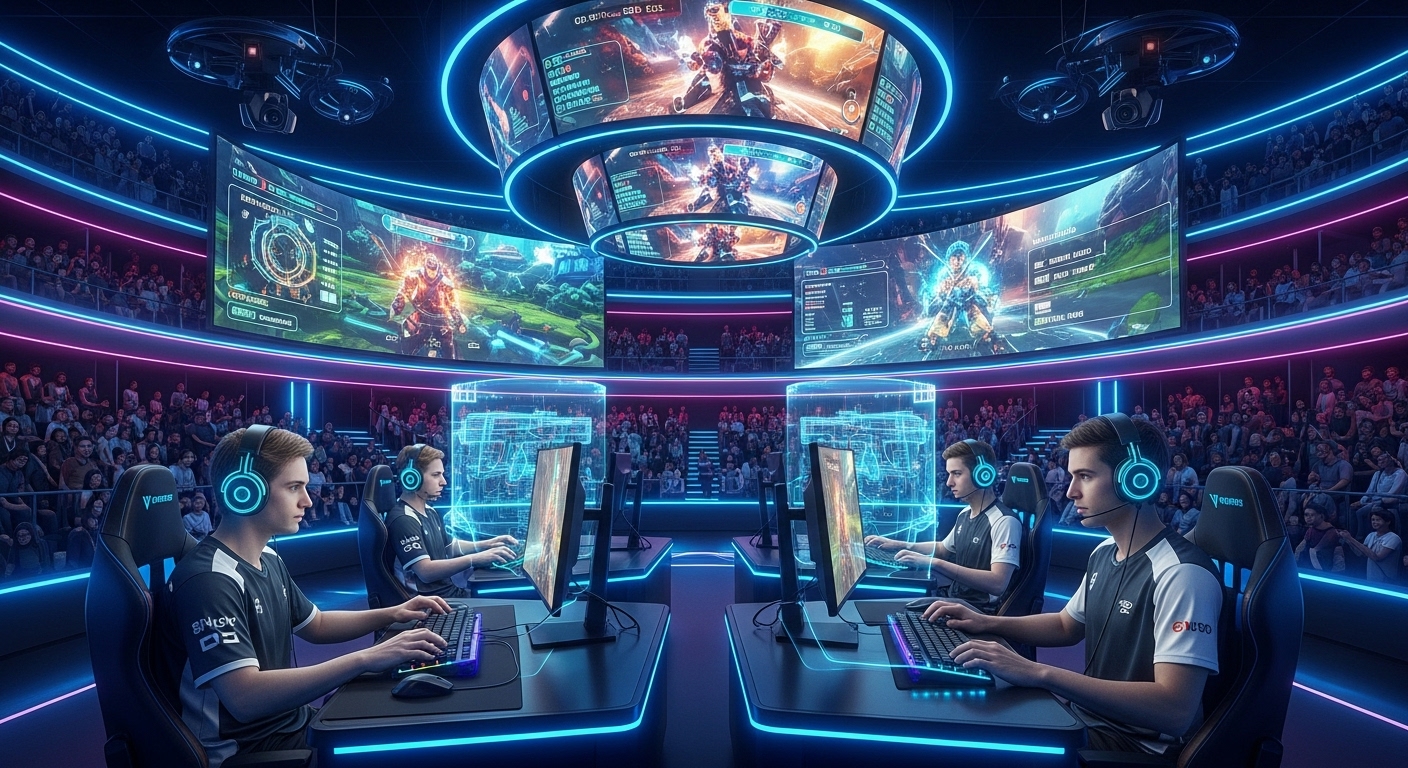
Esports has transformed the way the world views gaming. Once considered a niche hobby for dedicated enthusiasts, it has evolved into a global industry that attracts millions of players, fans, and investors. Competitive gaming now rivals traditional sports in popularity, viewership, and financial impact. From professional leagues to massive international tournaments, esports has created a unique ecosystem that merges competition, entertainment, and technology. This blog explores the history, growth, business, culture, and future of esports in detail.
The Origins of Competitive Gaming
The concept of competitive gaming dates back to the earliest days of video games. In the 1970s and 1980s, arcades provided spaces where players competed for high scores in games like Space Invaders, Pac-Man, and Donkey Kong. One of the earliest known tournaments, the Space Invaders Championship in 1980, attracted thousands of participants and highlighted the potential for organized competition.
As home consoles and personal computers became widespread, gaming shifted from arcades to living rooms. Players began forming communities around games like Street Fighter, Mortal Kombat, and StarCraft. These early competitions fostered skill development, strategic thinking, and social interaction among players, laying the groundwork for the esports culture we know today.
The rise of the internet in the 1990s was a turning point for competitive gaming. Online multiplayer games allowed players to compete with others across cities, countries, and continents. Games like Counter-Strike and Warcraft III became foundational for esports, establishing competitive structures, player rankings, and community-driven tournaments.
The Professionalization of Esports
Esports began to professionalize in the early 2000s. South Korea emerged as a pioneer with the rise of professional StarCraft players who achieved celebrity status. Television networks broadcast matches, and professional teams were formed. Coaches, analysts, and managers became integral parts of the competitive gaming ecosystem. Corporate sponsorships and tournament prize money legitimized esports as a career path.
Following South Korea’s model, esports expanded globally. Games such as League of Legends, Dota 2, and Overwatch attracted millions of players and viewers. International tournaments grew in scale and prestige, offering prize pools in the millions of dollars. Teams began marketing themselves as brands, and fan engagement became central to their success.
Streaming platforms revolutionized esports by connecting players and audiences in real time. Twitch, YouTube Gaming, and other services enabled fans to watch live gameplay, interact with players, and participate in communities. This accessibility and interactivity contributed to the rapid growth of esports worldwide.
Popular Esports Titles
Different genres of games have played key roles in shaping the esports landscape. Multiplayer online battle arena (MOBA) games, such as League of Legends and Dota 2, focus on teamwork, strategy, and coordination. These games often feature large-scale tournaments with massive audiences and multi-million-dollar prize pools.
First-person shooters (FPS) like Counter-Strike: Global Offensive, Call of Duty, and Valorant emphasize precision, reflexes, and tactical planning. FPS games create fast-paced, intense competition that keeps audiences engaged and invested in outcomes.
Battle royale games, including Fortnite and Apex Legends, focus on survival, adaptability, and creativity. These games appeal to younger audiences and leverage streaming platforms to reach millions of viewers.
Fighting games such as Street Fighter and Super Smash Bros rely on individual skill, timing, and strategy. Sports simulation games like FIFA and NBA 2K bring traditional sports into digital arenas, offering fans new ways to compete and engage with their favorite teams.
The Esports Ecosystem
Esports is more than players competing in games. It is a complex ecosystem involving teams, tournaments, sponsors, media, and fans. Professional teams recruit talent, provide coaching, analytics, and infrastructure, and build their brand presence. These organizations operate similarly to traditional sports franchises, with marketing, management, and fan engagement as core components.
Leagues and tournaments create structured competition, establish rules, and distribute prize pools. Major events such as The International for Dota 2 or the League of Legends World Championship attract millions of viewers and generate significant revenue.
Sponsors play a critical role in funding the industry. Companies from technology, lifestyle, and consumer products invest in teams and tournaments to reach the highly engaged esports audience. Streaming platforms and broadcasters also contribute to revenue by monetizing live events, advertisements, and premium subscriptions.
The combination of players, teams, leagues, sponsors, and audiences creates a self-sustaining ecosystem that continues to grow, attracting investment, talent, and innovation from around the world.
Careers in Esports
Esports offers a wide range of professional opportunities. Players earn salaries, sponsorship deals, tournament winnings, and streaming revenue. Top-tier players achieve global recognition and often engage in media appearances, branding opportunities, and fan events.
Beyond players, the esports industry employs coaches, analysts, managers, commentators, content creators, and marketing specialists. Educational institutions now offer esports scholarships and dedicated programs, providing structured paths for students interested in careers within competitive gaming.
Professional development in esports includes skill-building, teamwork, strategic thinking, and mental resilience. These qualities are not only essential for gaming but are also valuable for broader career opportunities.
The Role of Streaming Platforms
Streaming platforms have been transformative for esports. Twitch, YouTube Gaming, and other services allow audiences to watch live competitions, follow individual players, and interact with the gaming community in real time. This creates an immersive spectator experience that strengthens engagement and loyalty.
Streaming has also democratized content creation. Smaller creators can broadcast their gameplay, provide commentary, or produce tutorials and entertainment streams. This accessibility allows emerging talent to reach global audiences, further expanding the reach and influence of esports.
Live streaming has also contributed to esports culture by enabling fan interaction, fostering communities, and creating opportunities for collaboration between players, influencers, and brands.
Cultural Influence of Esports
Esports has become a cultural phenomenon, influencing fashion, music, and social media trends. Professional players are often seen as style icons, and tournaments frequently feature live entertainment, musical performances, and celebrity appearances.
Esports promotes inclusivity by valuing skill and strategy over physical attributes. It offers opportunities to people from diverse backgrounds and connects fans globally. Shared experiences during international tournaments create cross-cultural connections, allowing communities to form around mutual interest and passion for gaming.
Esports also encourages creativity and innovation. Fans contribute by creating content, memes, and fan art, adding to the cultural footprint of competitive gaming. This participatory culture strengthens the bond between players, organizations, and audiences.
The Business of Esports
Esports has become a multi-billion-dollar industry with diverse revenue streams. Tournament winnings, sponsorship deals, merchandise sales, media rights, and advertising contribute to its financial success. As events grow in scale and audiences increase, organizations invest in training facilities, arenas, and digital infrastructure.
Brands value esports audiences for their engagement, tech-savviness, and purchasing power. Sponsorship deals integrate products directly into content, allowing for immersive marketing experiences. Merchandise, in-game purchases, and digital content provide additional revenue channels for teams and organizations.
Esports organizations operate similarly to traditional sports franchises, focusing on long-term growth, brand development, and sustainable financial management. This professionalization has attracted investors and solidified esports as a viable global industry.
Global Reach and Expansion
Esports has a truly global presence. South Korea, China, and the United States were early leaders, but Europe, Southeast Asia, Latin America, and other regions are rapidly expanding their influence. International tournaments attract millions of viewers, streamed in multiple languages, creating shared global experiences.
Online competition allows players from remote locations to participate in elite tournaments. This accessibility ensures that talent is not restricted by geography and fosters a diverse, international player base. The global reach of esports also promotes cultural exchange and collaboration within the community.
Challenges in Esports
Despite its growth, esports faces challenges. Player burnout is a significant concern, as professional gamers often practice for long hours, face high-pressure competitions, and endure public scrutiny. Mental and physical health support is increasingly important for sustainability.
Regulation and standardization remain issues. Unlike traditional sports, esports rules and structures vary widely across games and regions. Establishing consistent guidelines, fair contracts, and ethical standards is essential for long-term stability.
Cheating, hacking, and online security are also concerns. Protecting the integrity of competition and safeguarding personal data are critical responsibilities for organizers and developers.
Public perception remains a challenge in some areas. While esports is gaining legitimacy, some still view it as entertainment rather than professional sport. Continued growth, visibility, and mainstream integration are necessary to solidify its reputation.
Technological Innovations in Esports
Technology drives the evolution of esports. High-speed internet, cloud gaming, streaming platforms, performance tracking, and analytics tools enhance both gameplay and spectator experiences. Virtual and augmented reality have the potential to create fully immersive tournaments.
Artificial intelligence helps teams analyze gameplay, develop strategies, and optimize training routines. Broadcasting innovations offer dynamic camera angles, real-time statistics, and interactive features, enriching the viewing experience.
Technological advancements also make esports more accessible, allowing new players and fans to engage regardless of location, experience, or resources.
The Future of Esports
The future of esports is filled with possibilities. Virtual and augmented reality will enable immersive experiences. AI-driven content and personalized experiences will enhance fan engagement. Global expansion into emerging markets will bring new talent and audiences.
Esports will likely integrate further with traditional sports and entertainment industries. Collaborative events, cross-industry sponsorships, and hybrid competitions may redefine competitive gaming experiences.
The industry will continue to evolve as both a professional sport and cultural phenomenon, influencing entertainment, education, social interaction, and technology on a global scale.
Conclusion
Esports has grown from small arcade competitions to a worldwide industry with professional players, international tournaments, and millions of fans. It is a unique intersection of gaming, technology, entertainment, and culture.
The industry’s success depends on innovation, inclusivity, sustainability, and ethical management. With technological advancements, global reach, and professionalization, esports is poised to remain a central force in digital entertainment and competitive culture.
Competitive gaming is more than a pastime; it is a movement that connects millions of people, celebrates creativity and skill, and shapes the future of entertainment. Esports is here to stay, continuing to redefine what it means to compete and engage in a digital world.