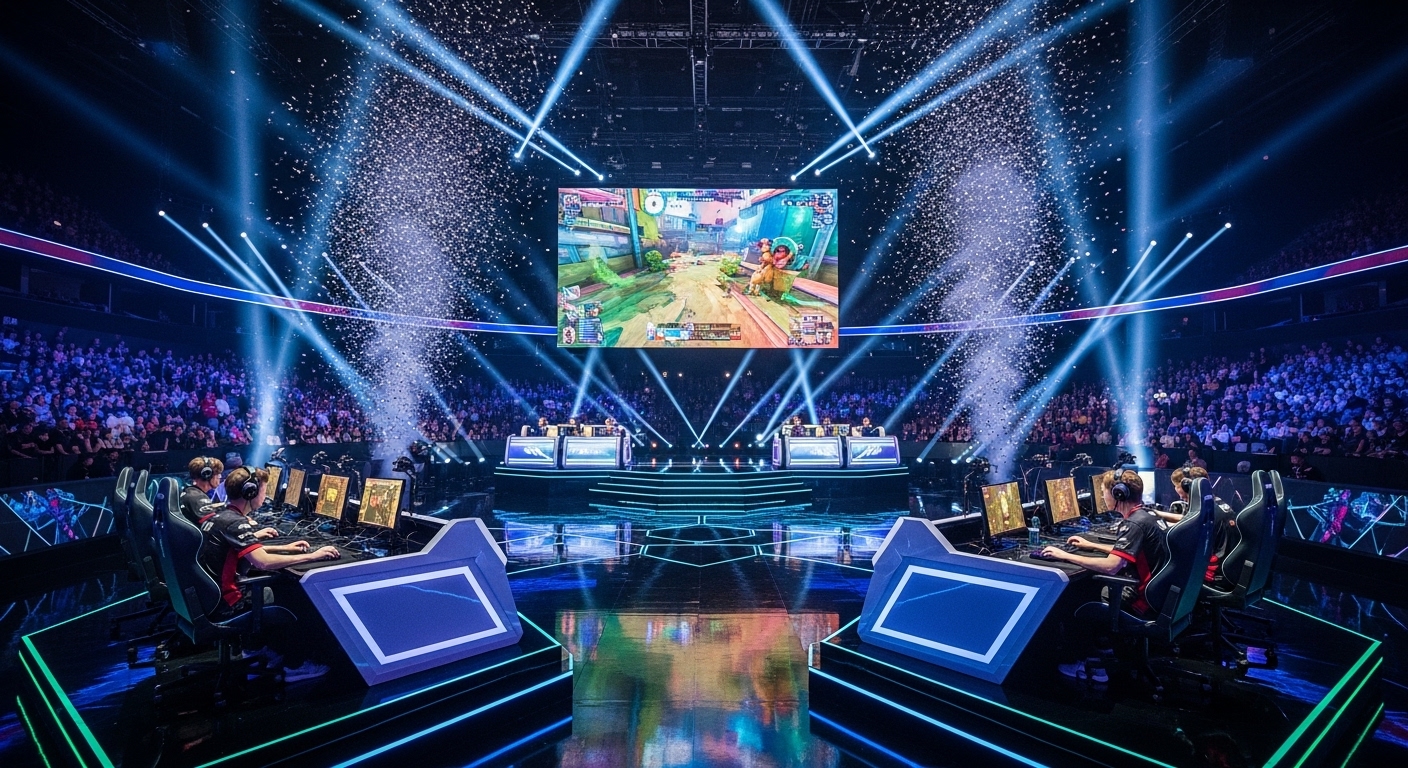
Professional gamers are often admired for their astonishing reaction times—their ability to make split-second decisions, aim with pixel-perfect precision, and execute complex maneuvers faster than the human eye can follow. In high-stakes esports tournaments, where milliseconds can determine victory or defeat, reflexes are one of the most prized skills. But these lightning-fast reactions aren’t just the result of natural talent; they’re the product of rigorous training, cognitive conditioning, and lifestyle discipline.
In this article, we’ll explore how pro gamers develop their incredible reflexes—diving deep into the science of reaction time, the techniques professionals use to sharpen their responses, and how technology and psychology play a vital role in fine-tuning human performance in gaming.
Understanding Reflexes in Esports
Reflexes refer to the body’s ability to respond to stimuli quickly. In gaming, this often involves visual-motor coordination—the process by which a player sees an event on-screen, processes it in the brain, and translates that into a physical response using a mouse, keyboard, or controller.
The average human reaction time to visual stimuli is around 250 milliseconds, but professional esports players routinely operate well below that threshold. Elite players in first-person shooters like Counter-Strike 2, Valorant, or Call of Duty can react in under 150 milliseconds, while players in rhythm or fighting games may perform even faster inputs based on predictive timing.
However, it’s not only about being physically quick; it’s about being mentally efficient. Professional gamers develop the ability to predict what’s about to happen before it does—a skill that reduces the time between seeing and acting.
The Science Behind Lightning-Fast Reflexes
To understand how gamers achieve this level of responsiveness, it helps to break down the science behind reaction time.
1. Neural Processing
Every action begins with a signal traveling through the nervous system. Visual information from the eyes reaches the brain’s visual cortex, which processes movement and color. The motor cortex then sends signals to the hands or fingers to respond.
Pro gamers train to minimize delay in this process by repeatedly exposing themselves to the same in-game situations until responses become automatic, bypassing conscious thought.
2. Cognitive Anticipation
Top players don’t simply react—they anticipate. Through hours of pattern recognition and strategic analysis, they learn to read cues such as enemy positioning, movement patterns, or audio hints.
This allows them to predict an opponent’s next move before it even happens, effectively giving the illusion of superhuman reflexes.
3. Myelination and Neural Pathways
Consistent repetition strengthens neural pathways through a process known as myelination, where the brain’s nerve fibers become more efficient at transmitting signals.
In simpler terms, the more a player practices specific movements—like flicking a crosshair to a target—the faster their brain becomes at sending the correct muscle commands.
Training Regimens That Build Reflex Speed
Professional gamers don’t rely on luck or raw skill alone; they follow structured training routines designed to refine their reactions.
1. Aim Trainers and Reflex Drills
Tools like Kovaak’s FPS Trainer, Aim Lab, and Osu! are widely used in the esports community to develop precision and speed.
These programs simulate real in-game scenarios, measuring accuracy and reaction time while providing instant feedback. Players can track their performance across thousands of repetitions, gradually shaving milliseconds off their response times.
2. Warm-Up Routines
Before tournaments or practice sessions, pros engage in 30–60 minute warm-ups to get their reflexes activated.
Warm-ups typically include target tracking, flick shots, and movement drills. These exercises improve muscle memory and help synchronize the eyes and hands for maximum responsiveness.
3. Game-Specific Repetition
Each game has its own unique rhythm. For example, a League of Legends player practices skill-shot timing, while a Valorant player perfects pixel-precise headshots.
Repetition helps players internalize the game’s pacing, leading to automatic responses rather than conscious decision-making.
4. Physical Training
Although gaming seems sedentary, professional players often include physical fitness in their regimens.
Cardio and strength exercises improve blood flow and oxygen delivery to the brain, enhancing overall cognitive function. Stretching and wrist exercises also maintain flexibility and reduce reaction lag caused by fatigue.
5. Eye-Tracking and Focus Exercises
Top players use eye-tracking software to monitor where they focus during gameplay.
By training their eyes to move efficiently and recognize key visual cues faster, they minimize wasted motion and improve reaction consistency.
The Role of Mental Conditioning
Mental agility is as crucial as physical dexterity. Pro gamers cultivate mental reflexes that allow them to remain calm, focused, and responsive under immense pressure.
1. Situational Awareness
Professional gamers develop a heightened sense of situational awareness—constantly scanning the environment, minimap, and sound cues.
This constant monitoring enables them to act preemptively rather than reactively, effectively reducing the need for raw reflex speed.
2. Focus and Flow State
Achieving “flow” is central to elite gaming performance. In this state, players are fully immersed, with time seeming to slow down and every movement feeling instinctive.
Mindfulness and meditation techniques help players enter this flow more consistently, improving attention control and emotional stability during competition.
3. Cognitive Training Games
Some players use apps like NeuroTracker, Lumosity, or CogniFit to improve visual processing speed and working memory.
These exercises condition the brain to recognize patterns faster and make decisions with reduced cognitive load.
4. Stress Management
Pressure can delay reflexes by clouding judgment and tightening muscles. That’s why many teams hire sports psychologists to teach breathing exercises, relaxation methods, and visualization techniques to help players remain composed in intense situations.
Reaction Time and Predictive Skill
Lightning-fast reflexes often come from anticipation, not pure reaction. Professional players use prediction models based on experience to act before an event fully unfolds.
For instance:
- In Counter-Strike 2, players pre-aim at likely enemy positions, reducing the need for sudden flicks.
- In Rocket League, professionals anticipate ball trajectories based on physics and prior movement.
- In Street Fighter or Tekken, fighting game experts learn to “read” opponents’ tendencies and counterattack at the first hint of movement.
By combining anticipation with reflexes, players create a hybrid skill that allows them to act almost instantaneously.
Hardware and Setup Optimization
Even the fastest reflexes can be hindered by poor equipment. Professional players fine-tune every aspect of their setup to eliminate unnecessary input delay.
1. High Refresh Rate Monitors
Pros use 240Hz or even 360Hz monitors to ensure visual updates are nearly instantaneous.
Higher refresh rates reduce screen latency, allowing the player’s brain to receive visual feedback faster.
2. Low-Latency Peripherals
Mechanical keyboards with fast switches and lightweight gaming mice are designed to minimize delay. Mouse sensors with near-zero input lag allow precise, instantaneous actions.
3. Custom Sensitivity Settings
Every professional has personalized settings for sensitivity and DPI (dots per inch).
This fine-tuning allows consistent movement patterns that optimize muscle memory and improve reflex reliability.
4. Stable Internet and System Optimization
A lag-free environment is essential for reflex performance. Pros use high-speed internet connections and optimized hardware to ensure their actions register instantly on screen.
Nutrition and Sleep for Reflex Enhancement
Physical health has a direct impact on reaction time. Elite esports players follow nutritional and rest regimens designed to enhance brain function.
1. Balanced Diet
Foods rich in omega-3 fatty acids, antioxidants, and vitamin B12 improve neural communication and energy levels.
Caffeine is used strategically to boost alertness, but pros avoid overreliance to prevent jittery hands and fatigue.
2. Hydration
Even mild dehydration can slow cognitive processing. Staying properly hydrated maintains consistent reaction time during long gaming sessions.
3. Adequate Sleep
Sleep is vital for cognitive recovery and memory consolidation. Studies show that reaction times decline sharply after sleep deprivation. Most professional gamers aim for 7–9 hours of quality sleep to ensure peak responsiveness.
The Role of Technology and Science in Reflex Training
As esports continues to evolve, so does the science of performance enhancement. Teams now integrate biometric tracking and AI-driven analysis into training.
1. Biometric Feedback
Sensors measure players’ heart rates, brain activity, and stress responses during practice.
By identifying moments of hesitation or overreaction, coaches can tailor mental conditioning to improve reflex consistency.
2. AI Coaching Tools
AI platforms analyze gameplay footage to detect reaction delays and suggest training adjustments. These systems help players identify microseconds of inefficiency in movement or aim.
3. Virtual Reality Reflex Training
Some teams use VR systems to enhance depth perception and reaction adaptability in 3D spaces. This cross-training approach sharpens visual awareness beyond 2D screens.
Reflex Training Across Different Esports Genres
Each esports genre requires specialized reflex skills.
1. FPS (First-Person Shooters)
Games like Valorant, CS2, and Overwatch demand pixel-perfect aiming and split-second shooting. Reflexes are trained through target tracking, reaction time tests, and crosshair alignment drills.
2. MOBAs (Multiplayer Online Battle Arenas)
In League of Legends or Dota 2, reflexes are more about quick decision-making and skill-shot timing. Players practice predicting enemy movements and managing ability cooldowns.
3. Fighting Games
Reflexes in Tekken or Street Fighter revolve around recognizing attack animations and executing frame-perfect counterattacks. Precision muscle memory is crucial here.
4. Racing and Sports Games
Titles like F1 Esports or FIFA require rapid adjustments and input accuracy under high pressure. Reflex training focuses on precision and rhythm rather than reaction bursts.
Psychological Factors Behind Reflex Mastery
Mental resilience and confidence significantly influence how reflexes perform under pressure. Even the fastest player can falter if nervous or distracted.
Professional gamers use techniques like:
- Visualization: Mentally rehearsing plays to precondition responses.
- Positive self-talk: Reinforcing confidence during intense matches.
- Breath control: Reducing anxiety-induced delays in reaction time.
A calm and focused mind reacts faster because it processes information more efficiently.
Consistency Over Raw Speed
While raw reaction speed is impressive, consistency is what separates good players from champions. Top professionals train to maintain fast, accurate reactions across long sessions, even under fatigue.
This requires a combination of:
- Proper ergonomics to prevent strain
- Balanced practice sessions with rest intervals
- Focus drills to maintain attention during extended gameplay
Sustainable performance is the ultimate goal—not just speed, but endurance and precision over time.
Conclusion
Lightning-fast reflexes in esports are not purely a gift—they’re the outcome of thousands of hours of intentional practice, mental conditioning, and physical discipline. Professional gamers train their brains and bodies like elite athletes, combining science, technology, and psychology to push human limits.
Through repetition, focus, and innovation, they transform milliseconds into opportunities, proving that reflexes are not just about speed but about preparation, precision, and presence of mind.
In the world of competitive gaming, every click counts—and the best players make those clicks faster, smarter, and sharper than anyone else.